Vol. 1, No. 1 — 2 November 2026 · Cover story · Broadway Corridor, Vancouver
A college becomes a developer
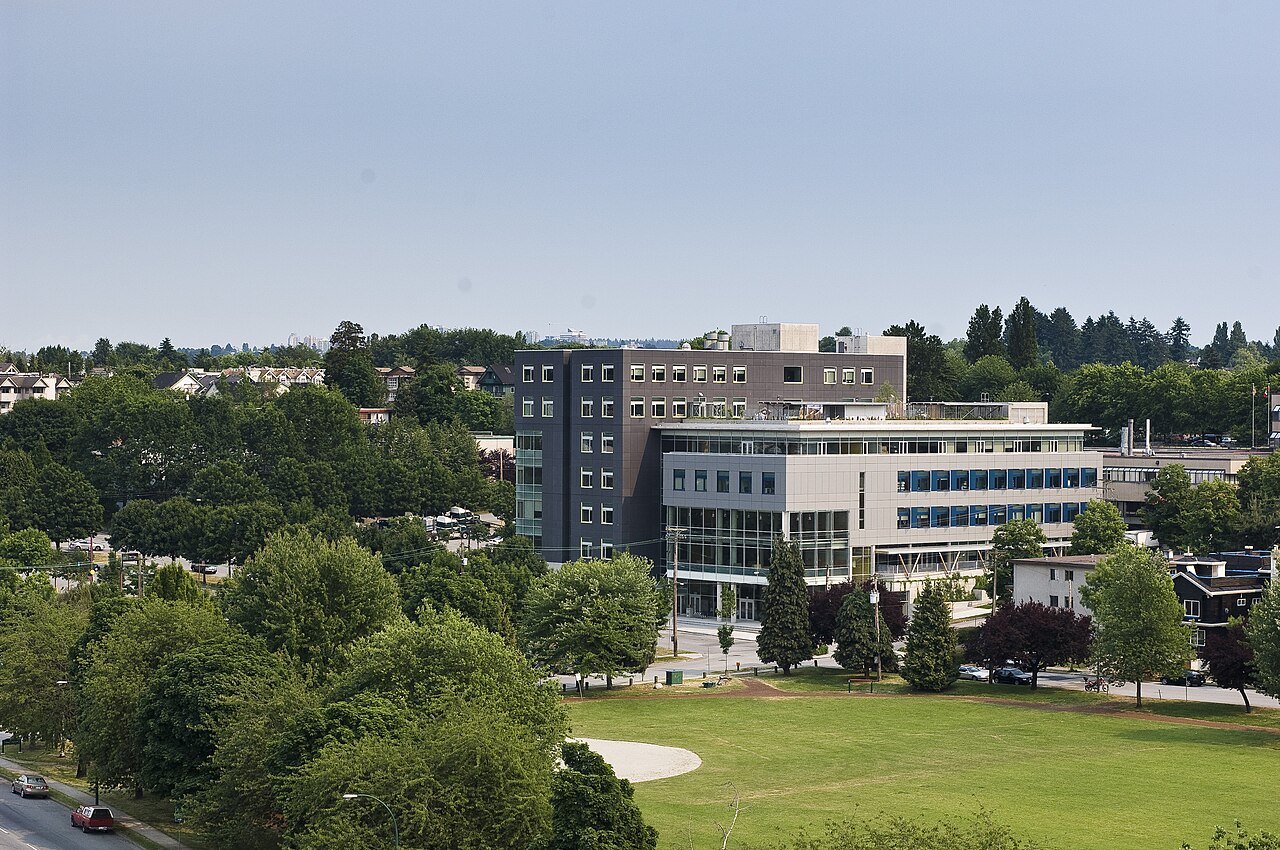
Vancouver Community College plans to rebuild its Broadway campus, add a second teaching building — and surround it all with seven residential towers. The city is now writing the planning rules for the site, and the final plan goes to council in early 2027.
One of the largest housing proposals in Vancouver right now comes not from a development company, but from a school. Vancouver Community College (VCC) wants to redevelop its Broadway campus
at 1155 East Broadway, across the street from VCC–Clark SkyTrain station, in phases: new academic buildings first, then housing, shops and services on the land that is freed up.
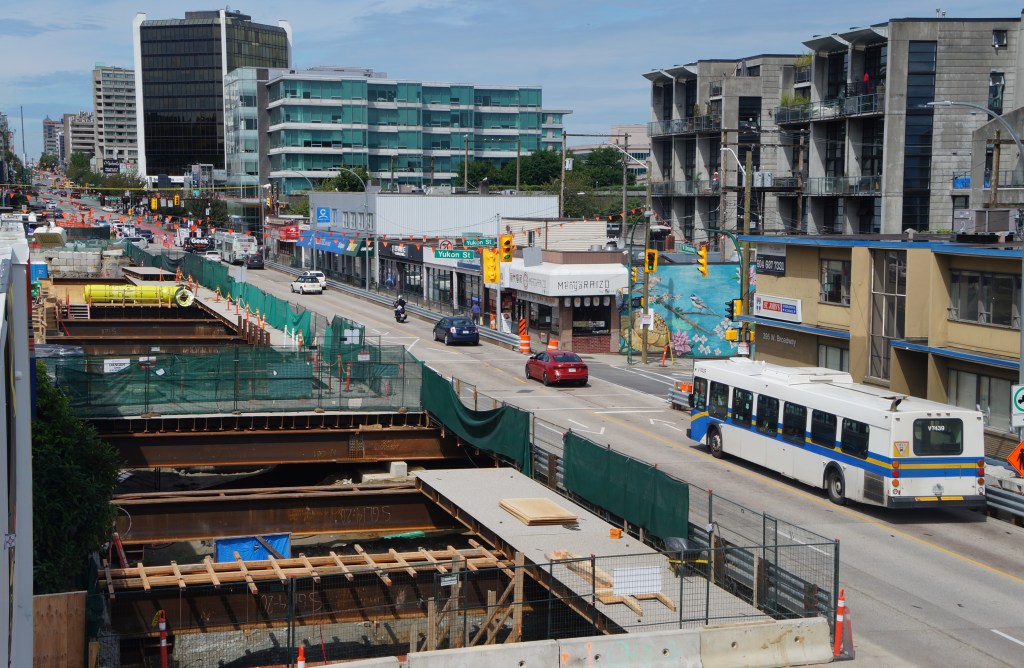
The framework is VCC’s Campus Plan, approved by the college’s Board of Governors in 2019. The catalyst project is the Centre for Clean Energy and Automotive Innovation: an eight-storey teaching building on what is now a parking lot on Great Northern Way. The building carries a $291-million capital cost, of which the province committed $271 million — 93 per cent. After it opens, a second academic building would rise on the east side of the same parking lot. Programs would then move out of the aging Building A, and the southern part of the site, toward Broadway, would be redeveloped with housing together with community, social and commercial space. Renewal of the downtown campus follows in later phases.
The numbers deserve a careful read, because the documents do not all agree. A project concept prepared by a team led by Urban Strategies Inc., with Avison Young and Francl Architecture, describes 264,824 square feet of new academic space and seven residential towers with 1,800 homes, including affordable housing, plus retail and commercial space. An earlier, more expansive vision from 2023 spoke of towers of up to 25 storeys, more than 3,300 homes, and three million square feet of buildable space. The gap is not a contradiction: 3,300 is roughly the maximum the site could hold under the city’s Broadway Plan, while 1,800 is the current concept. Which number survives rezoning negotiations is exactly what this paper will track.
One feature of the site makes the politics easier than usual: there is nothing to displace. The campus is teaching buildings and surface parking, not rental homes. VCC president Ajay Patel has pointed to that as a reason provincial and municipal governments are keen to support the project — a large, transit-oriented development with no displacement of existing renters.
VCC is also part of a wider shift. Some of the region’s biggest current projects come from institutions rather than traditional developers. TransLink has launched a real-estate arm whose first project is a 30-storey, 200-unit building across from the future Arbutus SkyTrain station. Downtown, the 57-storey Butterfly tower rises beside a social housing project next to First Baptist Church. And the Musqueam, Squamish and Tsleil-Waututh Nations — the original stewards of these lands — have become major builders in their own right, with a multi-billion-dollar portfolio and plans for tens of thousands of homes. VCC, a public college that has never built housing before, would join that company.
What happens next is policy, not construction. The City of Vancouver is running a planning program for the campus at the college’s request. Phase one engagement ran in spring 2026, with open houses on May 21, May 30 and June 3 and a survey that closed June 9. A second round of engagement, with refined policy directions and a preferred concept, is scheduled for this fall. The final plan is expected to go to council in early 2027. No rezoning application for the towers has been filed yet — that comes after the policy is set.
“It is unlocking the potential to serve the whole region in ways beyond our academic mission.”
Ajay Patel, president and CEO, Vancouver Community College
The engineer’s eye — what to watch
- The decant. The campus must keep teaching while its buildings come down. Phasing — new building first, demolition second — is the plan, and it is also the main risk.
- The rental share. Patel hopes to make “as many as possible” of the homes rentals, depending on government support. That is an aim, not a commitment. The rezoning negotiation will decide it.
- The partner. VCC has never developed housing. The real-estate partner it chooses will shape the design, the tenure mix and the pace of everything that follows.


Leave a Reply